Your Ad Here

Friday, December 28, 2007

Proxy Switcher Pro v3.9.0 4059

Proxy Switcher Pro v3.9.0 4059
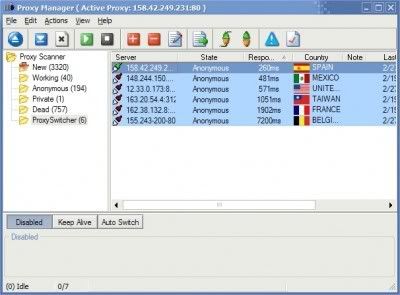
Different internet connections do often require completely different proxy server settings and it's a real pain to change them manually. Proxy Switcher offers full featured connection management solution.
This includes flexible proxy server list management, proxy server tester and anonymous surfing capabilities.

Code:

http://rapidshare.com/files/26052195/ProxySwitcherStandard_by-sameer.rar

pass:
Code:

www.warezforum.info

Windows Home Server

Windows Home Server is a home server operating system from Microsoft. Announced on January 7, 2007 at the Consumer Electronics Show by Bill Gates, Windows Home Server is intended to be a solution for homes with multiple connected PCs to offer file sharing, automated backups, and remote access.[3][4] It is based on Windows Server 2003 SP2.[5]

Windows Home Server was released to manufacturing on July 16, 2007.

Features

* Centralized Backup - Allows backup up to 10 PCs,[6] using Single Instance Store technology to avoid multiple copies of the same file, even if that file exists on multiple PCs.[7]
* Health Monitoring - Can centrally track the health of all PCs on the network, including antivirus and firewall status.[7]
* File Sharing - Offers network shares for computers to store the files remotely, acting as a network-attached storage device. Separate categories are provided for common file types like Documents, Music, Pictures and Videos.[7] The files are indexed for fast searching.[8]
* Printer Sharing - Allows a centralized print server to handle print jobs for all users.[7]
* Previous Versions - Takes advantage of Volume Shadow Copy Services to take point in time snapshots that allow older versions of files to be recovered.[9]
* Headless Operation - No monitor or keyboard attached to the device itself, much like a firewall or router.[7]
* Remote administration - Provides a client UI to remotely perform administrative tasks. Also allows Remote Desktop connections to the server.[10]
* Remote Access Gateway - Allows access to any PC on the network from outside the home.[10]
* Media Streaming - Can stream media to a Xbox 360 or other devices supporting Windows Media Connect.[7]
* Data redundancy - Guards against a single drive failure by duplicating data across multiple drives.[7]
* Expandable Storage - Provides a unified single and easily expandable storage space, removing the need for drive letters.[7]
* Extensibility through Add-Ins - Add-Ins allow third-party developers to extend the features and functionality of the server. Add-Ins can be developed using the Windows Home Server SDK, to provide additional services to the client computers or work with the data already on the server. Add-Ins can also be ASP.NET applications, hosted in IIS 6 running on WHS.[8]

Home Server Console

While the underlying operating system is built on Windows Server 2003 SP2, the configuration interface is designed to be user friendly enough that it can be set up without prior knowledge of server administration. The configuration interface, called the Home Server Console, is delivered as an RDP application to remote PCs - while the application runs on the server itself, the UI is rendered on the remote system. The Home Server Console client application can be accessed from any Windows PC. The server itself requires no video card or peripherals; it is designed to require only an Ethernet card and at least one other Windows XP or Windows Vista PC.

Technology

Windows Home Server is built on the same codebase as Windows Server 2003 SP2. It includes almost all technologies found in Windows Server 2003 SP2 but has been limited in some areas to remove unneeded complexity or limit its uses. It also includes some new capabilities not found in Windows Server 2003 SP2:

Drive Extender

Windows Home Server Drive Extender is a file-based replication system that provides three key capabilities:[11]

* Multi-disk redundancy so that if any given disk fails, data is not lost
* Arbitrary storage expansion by supporting any type of hard disk drive (Serial ATA, USB, FireWire etc.) in any mixture and capacity
* A single folder namespace (no drive letters)

Users (specifically those who configure a family's home server) deal with storage at two levels: Shared Folders and Disks. The only concepts relevant regarding disks is whether they have been "added" to the home server's storage pool or not and whether the disk appears healthy to the system or not. This is in contrast with Windows' Logical Disk Manager which requires a greater degree of technical understanding in order to correctly configure a RAID array.

Shared Folders have a name, a description, permissions, and a flag indicating whether duplication (redundancy) is on or off for that folder.

If duplication is on for a Shared Folder (which is the default on multi-disk Home Server systems and not applicable to single disk systems) then the files in that Shared Folder are duplicated and the effective storage capacity is halved. However, in situations where a user may not want data duplicated (e.g. TV shows that have been archived to a Windows Home Server from a system running Windows Media Center), Drive Extender provides the capability to not duplicate such files if the server is short on capacity or manually mark a complete content store as not for duplication.

Computer Backup

Windows Home Server Computer Backup automatically backs up all of the computers in a home to the server using an image-based system that ensures point-in-time-based restoration of either entire PCs or specific files and folders.[12] This technology uses Volume Shadow Services (VSS) technology on the client computer to take an image based backup of a running computer. Because the backup operates on data at the cluster level, single instancing can be performed to minimize the amount of data that travels over the network and that will ultimately be stored on the home server. This single instancing gives the server the ability to store only one instance of data, no matter if the data originated from another computer, another file, or even data within the same file.

Remote Access
Web Interface showing the shared files UI

The system also offers an SSL secured web browser based interface over the Internet to the shared file stores.[13] The release version promises access to the web interface via a free Windows Live-provided URL. The web interface also allows the uploading to and downloading of files from the content stores.[10] However, there is a limit of 2 GB for a single batch of upload.[14]

The system also acts as an RDP gateway, allowing remote control over the internet of supported internal machines on the home network over the internet.[13][14] Currently supported systems are those which would normally support Remote Desktop: Windows XP Professional, Tablet and Media Center editions and Windows Vista Business and Ultimate editions. The web interface also supports embedding the Remote Desktop ActiveX control, to provide remote access to home computers from within the web interface directly. Remote sessions can also connect to the Home Server console to configure the server over the internet.[14]

Compatibility

Windows Home Server features integration with Windows XP and Windows Vista through a software installation. Files stored on Windows Home Server can also be available through a Windows share, opening compatibility to a wide variety of operating systems.

Windows x64 Systems (XP x64, Vista x64, 2003 x64) are currently not supported for backup with Windows Home Server, but Microsoft has stated support will be considered after Windows Home Server is released. Integration of the backup suite with Mac OS X's Time Machine is also being considered.

Minimum system requirements:

The following minimum specs are needed:

* 1.0 GHz Intel Pentium 3 (or equivalent) processor
* 512 MB RAM
* 80 GB internal hard drive as primary drive
* 100 Mbit/s wired Ethernet

Additionally, the following are required for installation of the operating system only

* Bootable DVD drive
* Display
* Keyboard and mouse

Dedicated devices will have the operating system pre-installed and may be supplied with a server recovery disk which reloads the OS over a network connection.

Pricing and Availability

Windows Home Server will be sold in boxes at retail stores in System Builder style.

It is possible to obtain a copy of the System Builder version using one of the following SKU's:

* English – CCQ-00015

* French – CCQ-00016

* German – CCQ-00017 / CCQ-00038

* Spanish – CCQ-00018

The pricing of this System Builder Version (OEM Version) is in mid $100 range.

File Corruption Problems

On 20 December 2007 Microsoft formally warned users that files saved directly to or edited on shares on a WHS device may become corrupted [15], an issue first acknowledged in October 2007 [16]. Files which use alternate data streams may be affected, files which are part of backup sets are not affected.

Home Server

A home server is a device, typically a PC or other computer, connected to a home network that provides services to other devices in the household. Such services may include file and/or printer serving, media center serving, web serving, account authentication, and domain control (for faster network browsing). Because of the relatively low number of computers on a home network, a home server commonly does not contain latest or fastest hardware. Often, users recycle older systems, and home servers with processors of 1GHz and 256mb of RAM are common and perform decently. Large, preferably fast hard drives (ATA-100 or Serial ATA) and a network interface card are usually all the hardware required for home file serving. An uninterruptible power supply is recommended in case of power outages that can possibly corrupt data.

Operating systems

Home servers can run any operating system; some can run without graphical user interfaces (which makes more resources available for other tasks), and can be administered remotely through a command shell, or graphically through programs such as VNC, Webmin, or many others.

Users of Microsoft Windows may purchase additional copies (around US$85 to ~$400 and beyond) to use on a home server, or opt for free, open source solutions such as Linux or BSD UNIX that can be installed on any number of machines with minimal license restrictions.

Home server scenarios

Most home networks do not have or need servers, but hobbyists find good use for them. Most of the home servers today do not offer any services to the public internet, and operate as simple media-oriented devices. Many are simply glorified Network Attached Storage devices and other consumer devices to integrate TV's and gaming consoles with the PC and sometimes the internet.

Centralized storage

Home servers often act as network attached storage providing the major benefit that all users' files can be centrally and securely stored, with flexible permissions applied to them. Such files can be easily accessed 24/7 from any other system on the network, provided the correct credentials are supplied. This also applies to shared printers.

Such files can also be shared over the internet to be accessible from anywhere in the world using services such as FTP

Media serving

Home servers are often used to serve multi-media content, including photos, music, and video to other devices in the household (and even to the Internet; see Place Shifting and Orb). Using standard protocols such as DLNA or proprietary systems such as iTunes users can access their media stored on the home server from any room in the house. Windows XP Media Center Edition and Windows Vista can act as a home server, supporting a particular type of media serving that streams the interactive user experience to Media Center Extenders including the XBox360.
A typical MythTV menu.

On a Linux server, there are many open-source (free), fully-functional, all-in-one software solutions for media serving available. One such program is LinuxMCE, which allows other devices to boot off a hard drive image on the server, allowing them to become appliances such as set-top boxes. Asterisk, Xine, MythTV (another media serving solution), VideoLAN, SlimServer, and many other open-source projects are fully integrated for a seamless home theater/automation/telephony experience. Such services, if offered in a proprietary package, would cost around $100,000 (including hardware and tailored household programming)[1].

On an Apple Macintosh server (or peer-to-peer node), Front Row may be used.

Remote access
The Webmin Interface as it would appear in a standard browser.

A home server can be used to provide remote access into the home from devices on the Internet, using remote desktop software and other remote administration software. For example, Windows Home Server provides access to files stored on the home server via a web interface as well as access to Remote Desktop sessions on PCs in the house. Enthusiasts often use VPN technologies as well.

On a Linux server, two popular tools are (among many) Virtual Network Computing and Webmin. VNC allows clients to remotely view a server GUI desktop as if the user was physically sitting in front of the server. A GUI need not be running on the server console for this to occur; there can be multiple 'virtual' desktop environments open at the same time. Webmin allows users to control many aspects of server configuration and maintenance all from a simple web interface. Both can be configured to be accessed from anywhere on the internet.

Servers can also be accessed remotely using the commandline-based Telnet and SSH protocols.

Web serving

Some users choose to run a web server in order to share files easily and publicly (or privately, on the home network). Others set up web pages and serve them straight from their home, although this may be in violation of some ISPs terms of service. Sometimes these webservers are run on a nonstandard port in order to avoid the ISP's port blocking. The most widely used web server is the open source Apache daemon. It is easily configured, flexible, free, and runs on most recent operating systems.

Many other webservers are available; see Comparison of web servers.

Web proxy

Some networks have a HTTP proxy which can be used to speed up web access when multiple users visit the same websites, and to get past blocking software while the owner is using the network of some institution that might block certain sites. Public proxies are often slow and unreliable and so it is worth the trouble of setting up one's own private proxy.

Some proxies can be configured to block websites on the local network from being viewed if it is set up as a transparent proxy

Email

Many home servers also run email servers that handle email for the owner's domain name. The advantages are having much bigger mailboxes and maximum message size than most commercial email services. Access to the server, since it is on the local network is much faster than using an external service. This is also good for privacy as emails don't reside on an offsite server where they could possibly be viewed by disgruntled administrators.

BitTorrent

Home servers are ideal for utilising the BitTorrent protocol for downloading and seeding files as some torrents can take days, or even weeks to complete and preform better on an uninterrupted connection. There are many command-line based clients such as rTorrent and web-based ones such as TorrentFlux available for this purpose. BitTorrent also makes it easier for those with limited bandwidth to distribute large files over the internet.

Gopher

An uncommon and outdated service is the Gopher protocol that came about in the early 1990s before HTTP. Many of the remaining gopher servers are run off home servers utilising PyGopherd and the Bucktooth gopher server.

Home automation

Home automation requires a device in the home that is available 24/7. Often such home automation controllers are run on a home server.

Security monitoring

Relatively low cost CCTV DVR solutions are available that allow recording of video cameras to a home server for security purposes. The video can then be viewed on PCs or other devices in the house.

Family applications

Home servers can act as a host to family oriented applications such as a family calendar, to-do lists, and message boards.

See also

Operating systems

* BSD UNIX
* Various Linux distributions - some are specifically made for home servers
* Mac OS X
* Windows Home Server and other variants of Microsoft Windows

Technologies

* Client-server architecture
* File server
* Home computer
* Home network
* Network Attached Storage
* Residential gateway

Media serving software

* Front Row - Mac OS X
* LinuxMCE
* MythTV

Server software

* Comparison of web servers
* MySQL
* PHP
* List of mail servers
* List of FTP servers
* List of Jabber server software
* Samba (software)

Proxy server

proxy server is a server (a computer system or an application program) which services the requests of its clients by forwarding requests to other servers. A client connects to the proxy server, requesting some service, such as a file, connection, web page, or other resource, available from a different server. The proxy server provides the resource by connecting to the specified server and requesting the service on behalf of the client. A proxy server may optionally alter the client's request or the server's response, and sometimes it may serve the request without contacting the specified server. In this case, it would 'cache' the first request to the remote server, so it could save the information for later, and make everything as fast as possible.

A proxy server that passes all requests and replies unmodified is usually called a gateway or sometimes tunneling proxy.

A proxy server can be placed in the user's local computer or at specific key points between the user and the destination servers or the Internet.

Types and functions

Proxy servers implement one or more of the following functions:

Caching proxy server

A proxy server can service requests without contacting the specified server, by retrieving content saved from a previous request, made by the same client or even other clients. This is called caching. Caching proxies keep local copies of frequently requested resources, allowing large organizations and Internet Service Providers to significantly reduce their upstream bandwidth usage and cost, while significantly increasing performance. There are well-defined rules for caching. Some poorly-implemented caching proxies have had downsides (e.g., an inability to use user authentication). Some problems are described in RFC 3143 (Known HTTP Proxy/Caching Problems).

Web proxy

Proxies that focus on WWW traffic are called web proxies. Many web proxies attempt to block offensive web content. Another purpose is to serve as a web cache. Some web proxies reformat web pages for a specific purpose or audience (e.g., cell phones and PDAs)

Access control: Some proxy servers implement a logon requirement. In large organizations, authorized users must log on to gain access to the web. The organization can thereby track usage to individuals.

Anonymizing proxy server

Anonymous proxy servers generally attempt to anonymize web surfing.

Hostile proxy

Proxies can also be installed by online criminals, in order to eavesdrop upon the dataflow between the client machine and the web. All accessed pages, as well as all forms submitted, can be captured and analyzed by the proxy operator. For this reason, passwords to online services (such as webmail and banking) should be changed if an unauthorized proxy is detected.

Intercepting proxy server

An intercepting proxy (often incorrectly called "transparent proxy") combines a proxy server with a Gateway. Connections made by client browsers through the gateway are redirected through the proxy without client-side configuration (or often knowledge).

Intercepting proxies are commonly used in businesses to prevent avoidance of acceptable use policy, and to ease administrative burden, since no client browser configuration is required.

It is often possible to detect the use of an intercepting proxy server by comparing the external IP address to the address seen by an external web server, or by examining the HTTP headers on the server side.

Transparent and non-transparent proxy server

The term "transparent proxy" is most often used incorrectly to mean "intercepting proxy" (because the client does not need to configure a proxy and cannot directly detect that its requests are being proxied).

However, RFC 2616 (Hypertext Transfer Protocol -- HTTP/1.1) offers different definitions:

"A 'transparent proxy' is a proxy that does not modify the request or response beyond what is required for proxy authentication and identification.
"A 'non-transparent proxy' is a proxy that modifies the request or response in order to provide some added service to the user agent, such as group annotation services, media type transformation, protocol reduction, or anonymity filtering."

Forced proxy

The term "forced proxy" is ambiguous. It means both "intercepting proxy" (because it filters all traffic on the only available gateway to the Internet) and its exact opposite, "non-intercepting proxy" (because the user is forced to configure a proxy in order to access the Internet).

Forced proxy operation is sometimes necessary due to issues with the interception of TCP connections and HTTP. For instance interception of HTTP requests can affect the usability of a proxy cache, and can greatly affect certain authentication mechanisms. This is primarily because the client thinks it is talking to a server, and so request headers required by a proxy are unable to be distinguished from headers that may be required by an upstream server (esp authorization headers). Also the HTTP specification prohibits caching of responses where the request contained an authorization header.

Open proxy server

Main article: open proxy

Because proxies might be used for abuse, system administrators have developed a number of ways to refuse service to open proxies. IRC networks such as the Blitzed network automatically test client systems for known types of open proxy. Likewise, an email server may be configured to automatically test e-mail senders for open proxies, using software such as Michael Tokarev's proxycheck.

Groups of IRC and electronic mail operators run DNSBLs publishing lists of the IP addresses of known open proxies, such as AHBL, CBL, NJABL, and SORBS.

The ethics of automatically testing clients for open proxies are controversial. Some experts, such as Vernon Schryver, consider such testing to be equivalent to an attacker portscanning the client host. [1] Others consider the client to have solicited the scan by connecting to a server whose terms of service include testing.

Split proxy server

A split proxy is a proxy implemented as two programs installed on two different computers. Since they are effectively two parts of the same program, they can communicate with each other in a more efficient way than they can communicate with a more standard resource or tool such as a website or browser. This is ideal for compressing data over a slow link, such as a wireless or mobile data service, as well as for reducing the issues regarding high latency links (such as satellite internet) where establishing a TCP connection is time consuming.

Taking the example of web browsing, the user's browser is pointed to a local proxy which then communicates with its other half at some remote location. This remote server fetches the requisite data, repackages it, and sends it back to the user's local proxy, which then unpacks the data and presents it to the browser in the standard fashion.

Some Web accelerators are proxy servers. Some reduce the quality of JPEG images to speed transmission. Some use a split proxy with special protocols and local and remote caching. (See Google Web Accelerator.)

Reverse proxy server

Main article: reverse proxy

A reverse proxy is a proxy server that is installed in the neighborhood of one or more web servers. All traffic coming from the Internet and with a destination of one of the web servers goes through the proxy server. There are several reasons for installing reverse proxy servers:

* Security: the proxy server is an additional layer of defense and therefore protects the web servers further up the chain.
* Encryption / SSL acceleration: when secure web sites are created, the SSL encryption is often not done by the web server itself, but by a reverse proxy that is equipped with SSL acceleration hardware. See Secure Sockets Layer.
* Load balancing: the reverse proxy can distribute the load to several web servers, each web server serving its own application area. In such a case, the reverse proxy may need to rewrite the URLs in each web page (translation from externally known URLs to the internal locations).
* Serve/cache static content: A reverse proxy can offload the web servers by caching static content like pictures and other static graphical content.
* Compression: the proxy server can optimize and compress the content to speed up the load time.
* Spoon feeding: reduces resource usage caused by slow clients on the web servers by caching the content the web server sent and slowly "spoon feeds" it to the client. This especially benefits dynamically generated pages.
* Extranet Publishing: a reverse proxy server facing the Internet can be used to communicate to a firewalled server internal to an organisation, providing extranet access to some functions while keeping the servers behind the firewalls.

Circumventor

A circumventor is a method of defeating blocking policies implemented using proxy servers. Ironically, most circumventors are also proxy servers, of varying degrees of sophistication, which effectively implement "bypass policies".

A circumventor is a web-based page that takes a site that is blocked and "circumvents" it through to an unblocked web site, allowing the user to view blocked pages. A famous example is 'elgooG', which allowed users in China to use Google after it had been blocked there. elgooG differs from most circumventors in that it circumvents only one block.

Students are able to access blocked sites (games, chatrooms, messenger, offensive material, internet pornography, etc.) through a circumventor. As fast as the filtering software blocks circumventors, others spring up. It should be noted, however, that in some cases the filter may still intercept traffic to the circumventor, thus the person who manages the filter can still see the sites that are being visited.

Circumventors are also used by people who have been blocked from a web site.

Another use of a circumventor is to allow access to country-specific services, so that Internet users from other countries may also make use of them. An example is country-restricted reproduction of media and webcasting.

The use of circumventors is usually safe with the exception that circumventor sites run by an untrusted third party can be run with hidden intentions, such as collecting personal information, and as a result users are typically advised against running personal data such as credit card numbers or passwords through a circumventor.

At schools and offices

Many work places and schools are cracking down on the web sites and online services that are made available in their buildings. Since circumventors are used to bypass censors in computers, web sites like MySpace, Bebo, Xanga, Silkroad Online, Youtube, Miniclip, Facebook, and other non-work or school related social web sites have become targets of mass banning.

Proxy Web server creators have become more clever allowing users to encrypt links, and any data going to and from other web servers. This allows users to access websites that would otherwise have been blocked.

A special case of web proxies are "CGI proxies". These are web sites that allow a user to access a site through them. They generally use PHP or CGI to implement the proxying functionality. CGI proxies are frequently used to gain access to web sites blocked by corporate or school proxies. Since they also hide the user's own IP address from the web sites they access through the proxy, they are sometimes also used to gain a degree of anonymity, called "Proxy Avoidance".

Managed 'clean-pipe' proxy servers

Used in an increasing number of work-places, especially those with multiple Internet breakout points. Currently an emerging technology to rival in-house, hardware solutions. Many consider this a branch of Software as a Service or Security as a Service. Providers include AT&T and ScanSafe.

Risks of using anonymous proxy servers

In using a proxy server (for example, anonymizing HTTP proxy), all data sent to the service being used (for example, HTTP server in a website) must pass through the proxy server before being sent to the service, mostly in unencrypted form. It is therefore possible, and has been demonstrated, for a malicious proxy server to record everything sent to the proxy: including unencrypted logins and passwords.

By chaining proxies which do not reveal data about the original requester, it is possible to obfuscate activities from the eyes of the user's destination. However, more traces will be left on the intermediate hops, which could be used or offered up to trace the user's activities. If the policies and administrators of these other proxies are unknown, the user may fall victim to a false sense of security just because those details are out of sight and mind.

The bottom line of this is to be wary when using proxy servers, and only use proxy servers of known integrity (e.g., the owner is known and trusted, has a clear privacy policy, etc.), and never use proxy servers of unknown integrity. If there is no choice but to use unknown proxy servers, do not pass any private information (unless it is properly encrypted) through the proxy.

In what is more of an inconvenience than a risk, proxy users may find themselves being blocked from certain Web sites, as numerous forums and Web sites block IP addresses from proxies known to have spammed or trolled the site.

What Is Proxy Server ?

A proxy server is a server that retrieves Web pages for you, providing only its own identity to the sites it visits. Requesting data comes first to the proxy, and through the requested proxy, the data is transmitted to you. Usually, they are used to increase the effective network speed of your connection to the Internet because they save informations and files that are requested by many many users in a special database what is called "cache". When you retrieve pages behind proxy, then proxy server first look into "cache" and if the same information is found you will gets directly because of previsly storing in "cache".
Anonymous proxy
server hide your IP address and hide information about you and your interests.Besides that, anonymous proxy servers can help in the cases when, for example, the owners of the Internet resource force some limitation on users from certain countries, cities, geographic regions or even restrictions on some ip address ranges.

What Is Anonymous Proxy !


Of all the activities the Internet offers, browsing Web pages is probably the last thing many folks would consider hazardous. Web-surfing is not without threats to internet privacy and every visit to Web Site may be risk to you because everything is automatically recorded for analyzing purpose. Some Web servers can be set up from webmaster and administrators with malicious intention to "grab" your E-mail address and other info from your browser. This capability is often used to put your name on spammers lists.


It can also be used to logs and keep track of exactly who visits a Web site. Anonymous proxy server together with knowledge of spoofing HTTP variables can prevent this malicious spammer activity along with sniffing your real ip address and other informations from prying webmasters.